
Cracked Crown, Mesh Instead of a Cap, and Water in the Brick — Rolling Lane, St. Matthews, KY
Documented by David York, Owner · Inspection: September 2026
A St. Matthews homeowner's brick masonry chimney on Rolling Lane was inspected and photographed in September 2026. The crown was cracked and had been poured with no real overhang, each clay flue tile had wire mesh folded over it instead of a real chimney cap, and efflorescence and open mortar joints showed water moving through the brick. Inside, the basement natural-draft gas water heater was venting into a masonry flue far bigger than it needs, which sets up condensation. No repair has been done yet; below is what we documented and what we recommended.
 Finding 1
 Finding 2
 Finding 3
 Finding 4
 Finding 5
Book an inspection online · Call (502) 744-0341
Problem Identified
Every problem on this chimney traces back to one thing: water getting into the chimney and staying there, from the top, from the inside, and through the brick.
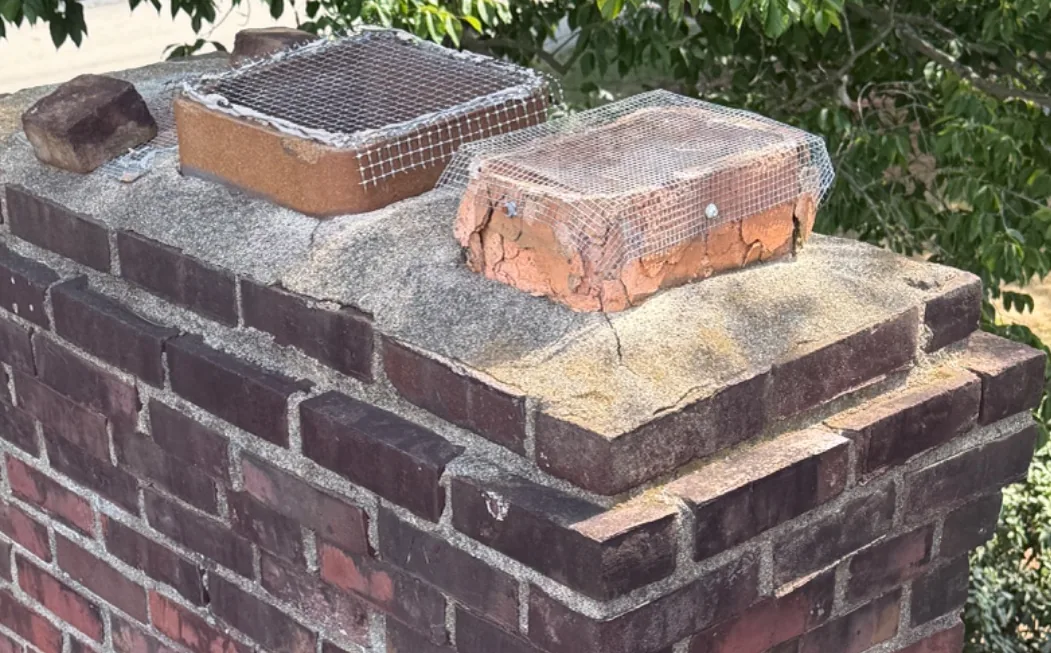
At the top, there was no real chimney cap. Wire mesh folded over each flue tile keeps out some debris, but rain falls straight into the flues, and there were signs animals had been getting in around it. The concrete crown that caps the brickwork was cracked, and it was built in a way that guarantees cracking: no real slope or overhang, so water runs down the face of the brick instead of dripping clear, and it was poured tight against the clay flue tile with no bond break. Clay and concrete expand at different rates, so a crown poured that way cracks sooner or later even if it's patched. That's why we wrote this up as a crown problem, not just a crack.
Inside, the flue serving the basement natural-draft gas water heater is oversized. A gas water heater puts out far less heat than a fireplace, so its exhaust cools on the way up a big masonry flue and moisture condenses inside, breaking down the clay tile and mortar from the inside over time. A water heater venting into an oversized masonry flue is a classic condensation setup.
Taken one at a time, each of these looks minor. Together they show water entering at the top, condensing inside, and working its way out through the brick. Fixing just one usually means another visit later.
What We Found
- No proper chimney cap: wire mesh folded over each clay flue tile instead, with signs of animals getting in
- Top of one flue tile crumbling, the kind of deterioration moisture in a flue causes over time
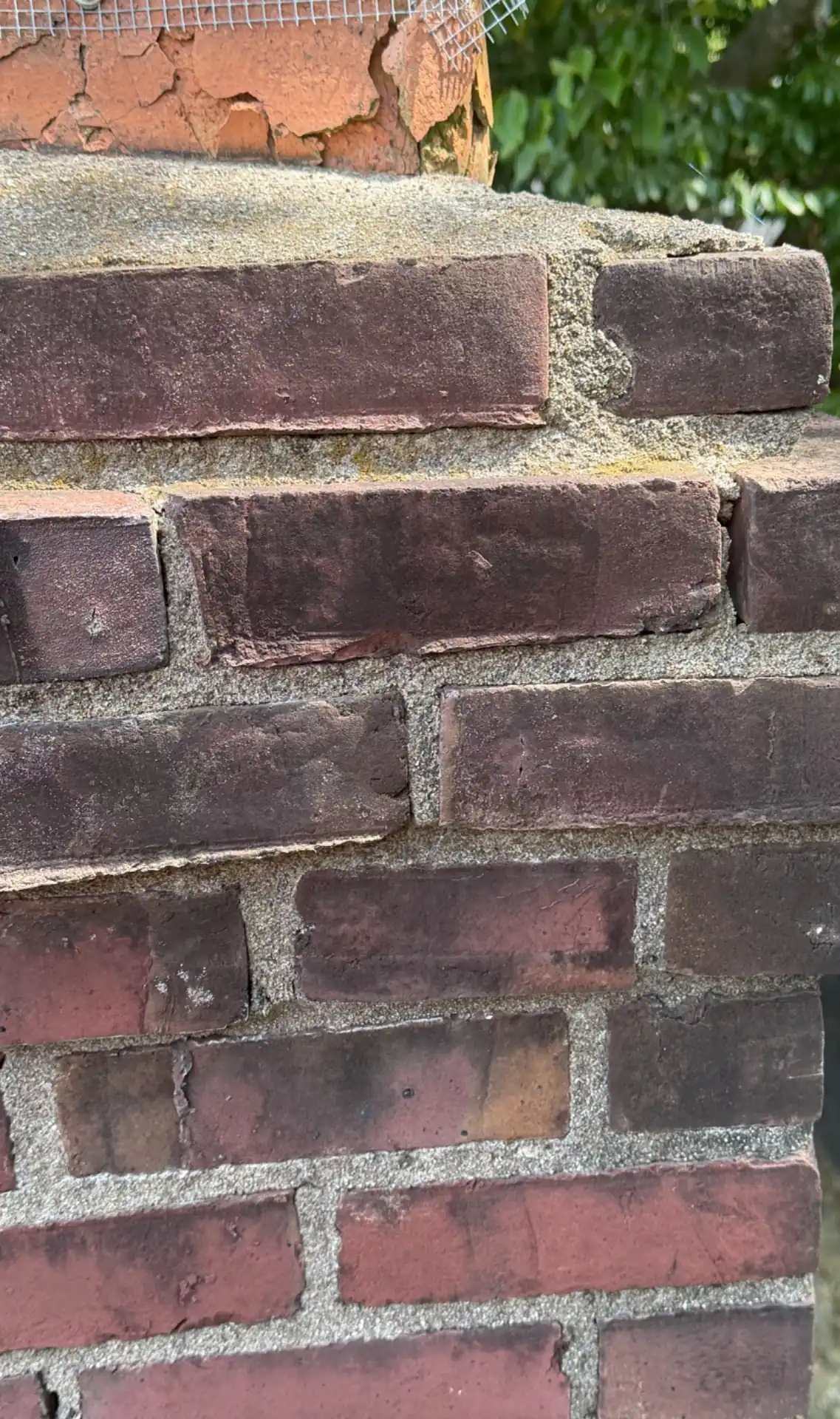
- Cracked and broken concrete crown, with no real slope or overhang to shed water clear of the brick
- Crown poured tight against the flue tile with no bond break, so it will keep cracking even if patched
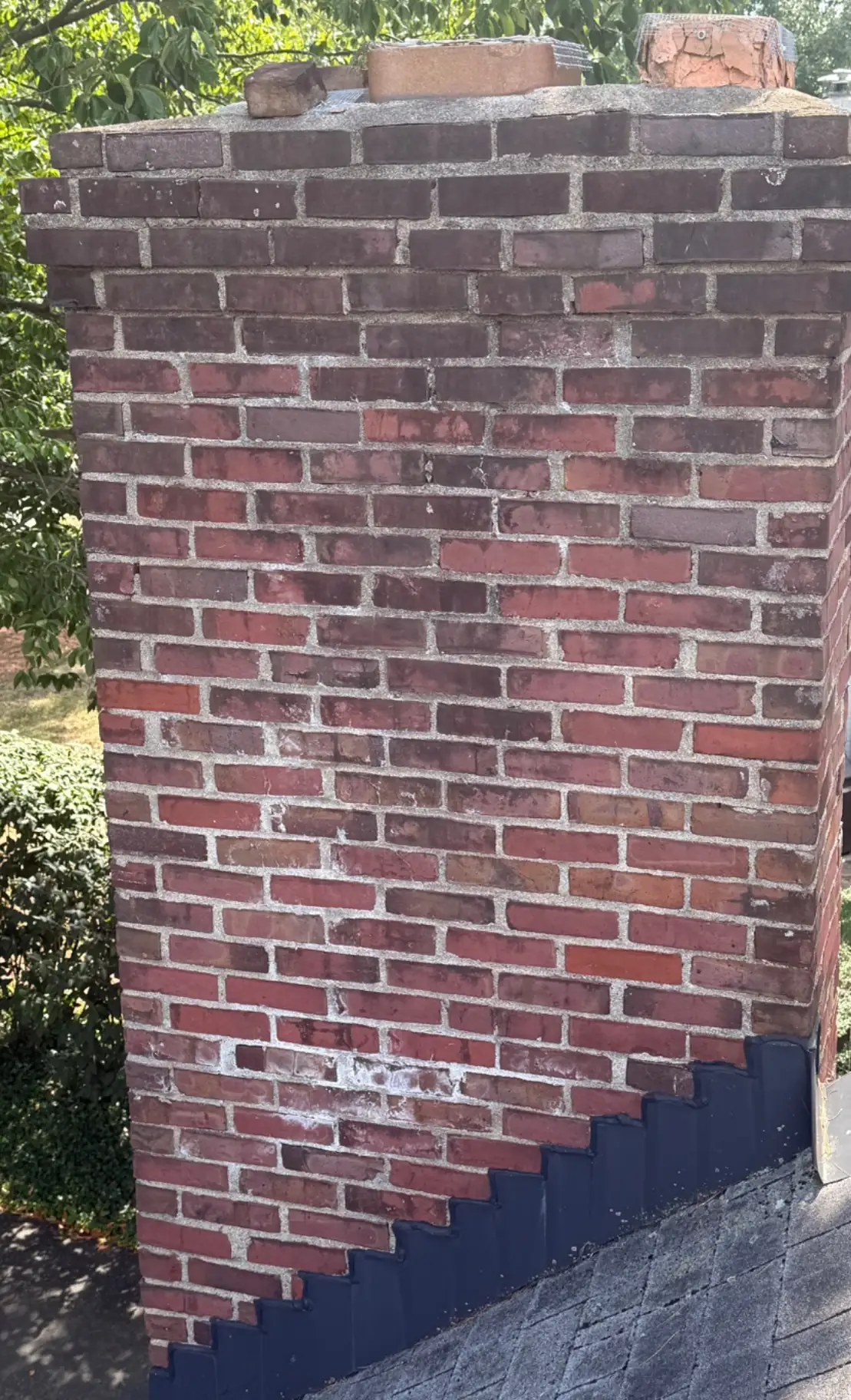
- Oversized masonry flue serving the basement natural-draft gas water heater, with the staining and white mineral deposits that condensation leaves behind
- Mortar joints recessed or missing in places from weather exposure
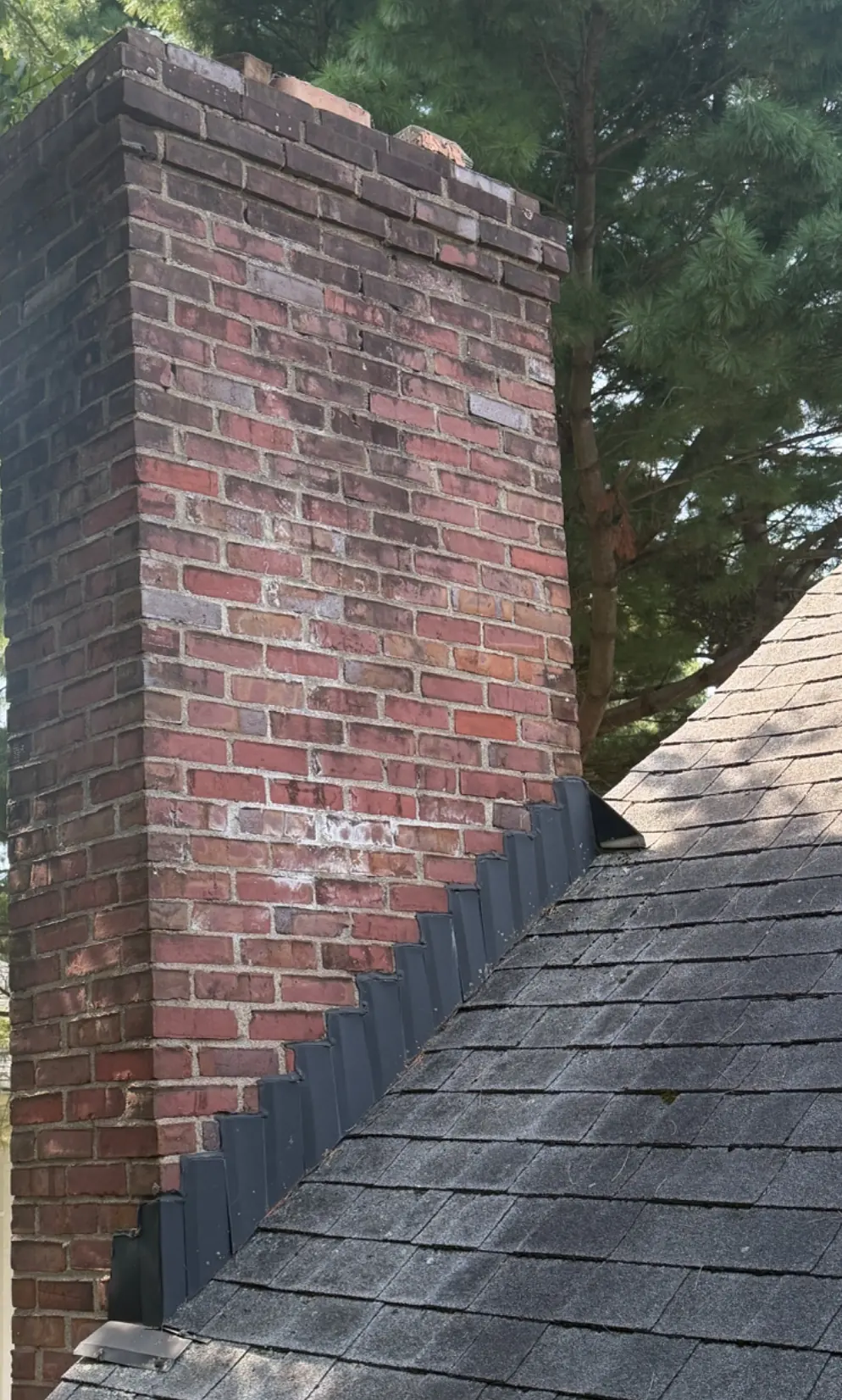
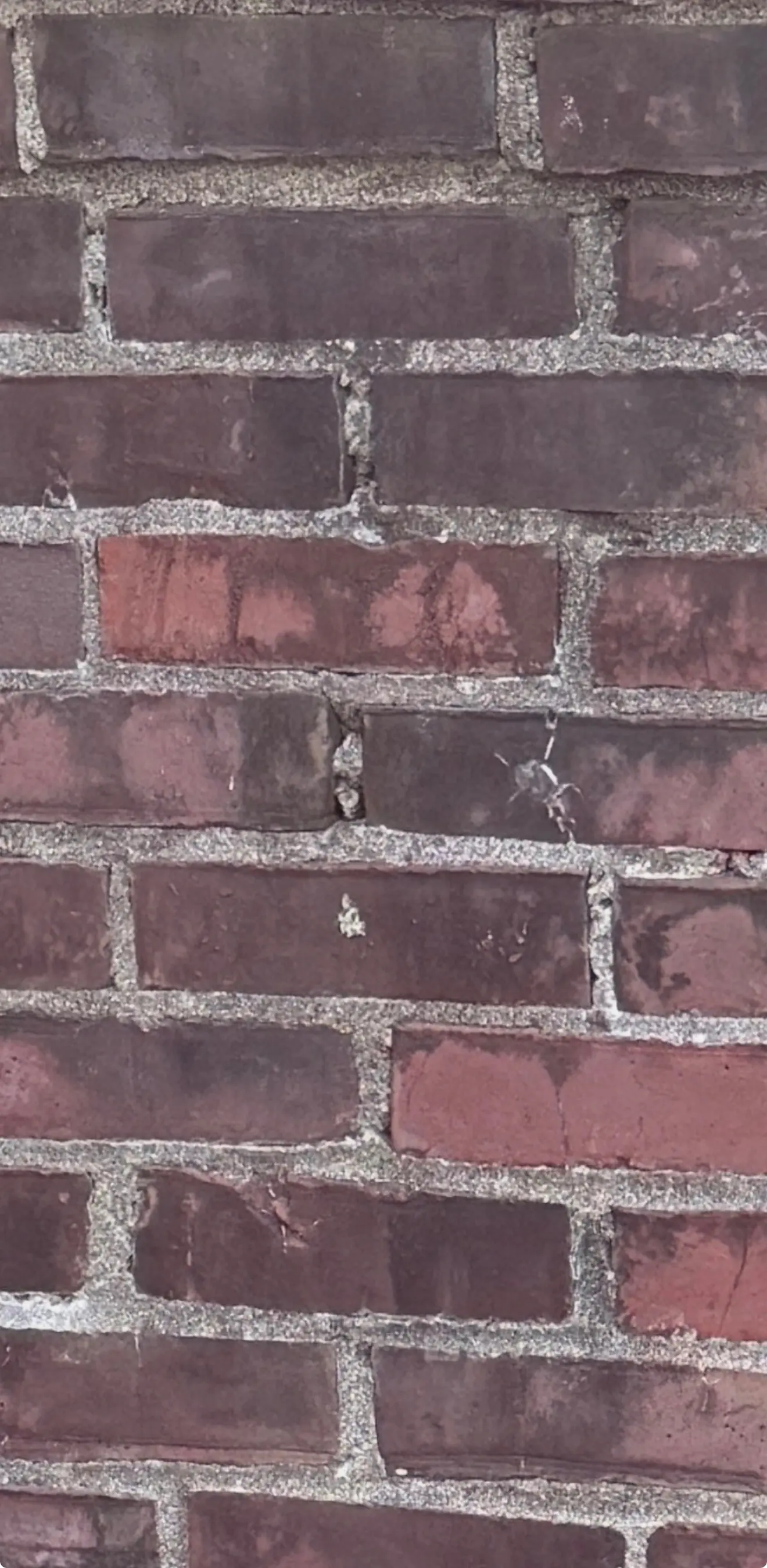
- White efflorescence on the exterior brick, heaviest just above the step flashing
- Moss and plant growth attached to the chimney, holding moisture against the brick
What We Recommended
- Stainless steel chimney cap (outside-mounted, hip/ridge style) with spark-arrestor mesh to replace the folded wire mesh, keep rain out of the flues and close off where animals were getting in
- Formed concrete crown with a drip edge so water drips clear of the brick, and expansion joints around the flue tiles so it doesn't crack the way the old one did
- Tuckpointing and vegetation removal: grind out and refill the recessed and missing mortar joints to restore the brick's weather protection
- Water heater liner (UL-listed aluminum) sized for the gas water heater, so exhaust stays warm enough to clear the top instead of condensing inside the chimney
- Scaffolding set-up and removal as needed to reach the top of the chimney safely for the crown, cap and masonry work
Seeing something similar on your chimney? See a related chimney leak inspection on Lake Forest Parkway in Middletown, browse all of our inspection findings, or see completed repair projects.
What homeowners say about working with us
“The cap installation went smoothly and while already on the roof they checked the crown for any cracking. Found a small crack that hadn't been there last year. Sealed it while up there. That kind of attention while already on site saves a separate visit.”
“Told them I needed a new chimney crown and caps, had the job done a few days later. Excellent folks! Great price!”
Schedule Your Chimney Inspection
White streaks on the brick, a crumbling crown edge, or flue tiles with no real cap are all worth a look, and they're the same things we check on every chimney inspection in St. Matthews and nearby Louisville neighborhoods. We'll get on the roof, show you exactly what's happening with photos, and give you an honest answer about what it needs.